
 Admin
Admin
 29/06/2026
Cockroach Pest Control in Dubai: Gel vs Spray – Which One Actually Works Better?
If you've spotted cockroaches in your kitchen, bathroom, or utility areas in Dubai, you're not alone. The city's heat, humidity, and dense urban infrastructure make it one of the most cockroach-friendly environments around. And if you've ever tried to deal with an infestation yourself, you've probably come across two main options: gel treatment and spray treatment to get rid of cockroaches.
Both are used in professional cockroach pest control in Dubai. But they don't work the same way. And depending on your situation, one will almost certainly outperform the other.
Why Cockroach Infestations Are So Common in Dubai
Before comparing treatments, it helps to understand what you're dealing with.
German cockroaches are the most common species found in residential and commercial properties across Dubai. They're small, fast-breeding, and almost always found in kitchens. They thrive in warm, moist areas close to food and water. Apartment buildings, commercial kitchens, restaurants, and shared laundry facilities are all prime environments.
A single female German cockroach can produce hundreds of offspring in a short period. By the time you see a few cockroaches, there's usually a much larger population hiding behind appliances, inside cabinets, and under sinks.
What Is Gel Cockroach Treatment?
Gel bait treatment involves applying small dots of insecticide-laced gel in the areas where cockroaches are most active. Cockroaches are attracted to the gel, consume it, and then return to their harbourage sites where they die. Other cockroaches that come into contact with the dead insect, or their droppings, also ingest the toxicant. This chain reaction is called horizontal transfer and it's what makes gel so effective against hidden populations.
Gel treatment is applied precisely, usually in cracks, corners, behind appliances, and inside cabinets. It's virtually odourless, doesn't require residents to vacate the property, and leaves no visible residue on surfaces. That's a big deal in apartments, commercial kitchens, and spaces where food handling is involved.
What Is Spray Cockroach Treatment?
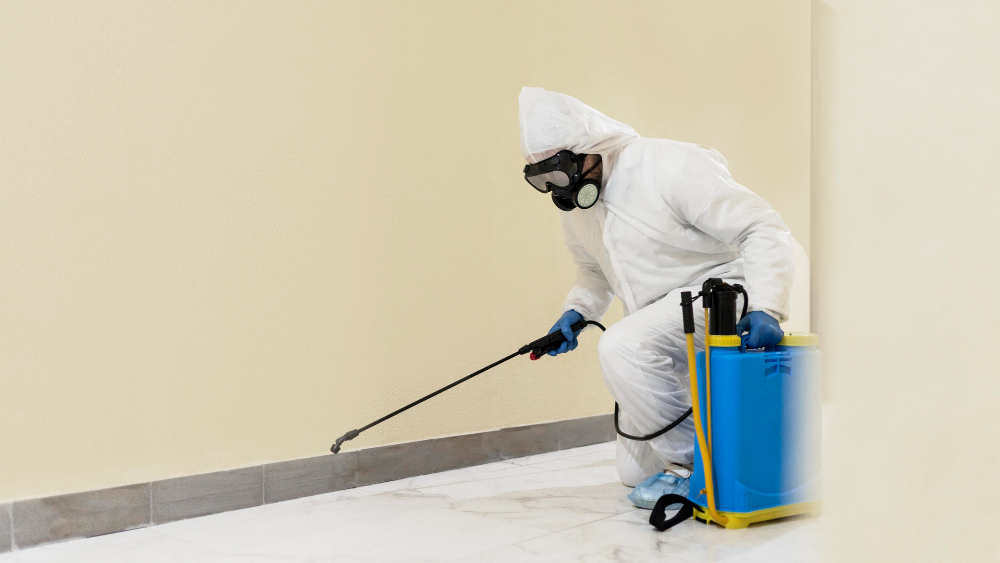
Residual spray cockroach treatment involves applying a liquid insecticide to surfaces where cockroaches walk and shelter. When cockroaches cross treated surfaces, they pick up the chemical on their legs and body, which eventually kills them.
Spray is effective for large-scale knockdown, particularly in warehouses, outdoor areas, drainage systems, and commercial spaces with high cockroach pressure. It creates a residual barrier that kills cockroaches on contact over several weeks.
The downside? Spray has a strong smell, requires the space to be vacated during and after application, and needs to dry fully before re-entry. In kitchen environments, surface contamination is also a concern. And cockroaches, particularly German cockroaches, can develop resistance to certain spray formulations over time.
Gel vs Spray: Which Cockroach Treatment Works Better in Dubai?
For most residential and commercial kitchens in Dubai, gel treatment wins. Here's why.
German cockroaches, the species you're most likely dealing with in apartments and commercial kitchens, respond extremely well to bait treatment. The gel reaches deep harbourage sites that spray can't easily penetrate. It works around the clock. And because the active ingredient spreads through the cockroach population rather than just killing what's on the surface, it addresses the infestation rather than just the visible insects.
Spray is better suited to large open areas, outdoor perimeters, drainage systems, and situations where there's a sudden and heavy infestation that needs fast knockdown. In Dubai's commercial pest control space, both methods are often used together. Gel handles the harbourage population and spray handles the entry points and perimeter.
For cockroach extermination in Dubai that actually delivers long-term results, a combined or targeted professional approach beats any single off-the-shelf product every time.
Why DIY Cockroach Control Rarely Works
Hardware store sprays and consumer gel products seem tempting. But they're rarely strong enough, and they're almost never applied in the right places.
Without a proper pest inspection, you won't know where the cockroaches are harbouring, where they're entering from, or how large the population actually is. Treating the surfaces you can see while leaving the harbourage sites untouched just shifts the problem around temporarily.
Professional cockroach control in Dubai involves inspecting wall voids, behind appliances, plumbing cavities, and all the places cockroaches actually live. That's what makes the treatment work.
How Long Does Cockroach Treatment Take to Work?
With gel treatment, you'll typically see a significant reduction in cockroach activity within five to seven days. Complete population collapse usually takes two to three weeks because the horizontal transfer needs time to work through the population.
Spray treatment produces faster visible knockdown, sometimes within 24 to 48 hours, but it doesn't eliminate the harbourage population as effectively on its own.
Combining both, where appropriate, gives you faster initial results with better long-term control.
What to Expect from Expert Pest Control's Cockroach Treatment
At Expert Pest Control, cockroach treatment in Dubai starts with a thorough inspection. We identify the species, the harbourage sites, the severity of the infestation, and the right combination of treatment methods for the specific property.
We use gel bait treatment for residential and kitchen environments, residual spray where applicable for perimeter and drainage management, and we schedule follow-up visits to monitor and re-treat as needed. For commercial properties and food businesses, our treatments comply with Dubai Municipality requirements.
Long-term pest prevention isn't just about the treatment itself. It's also about identifying the conditions that are attracting cockroaches and helping clients understand what to change to reduce recurrence.
← Back to Blog

